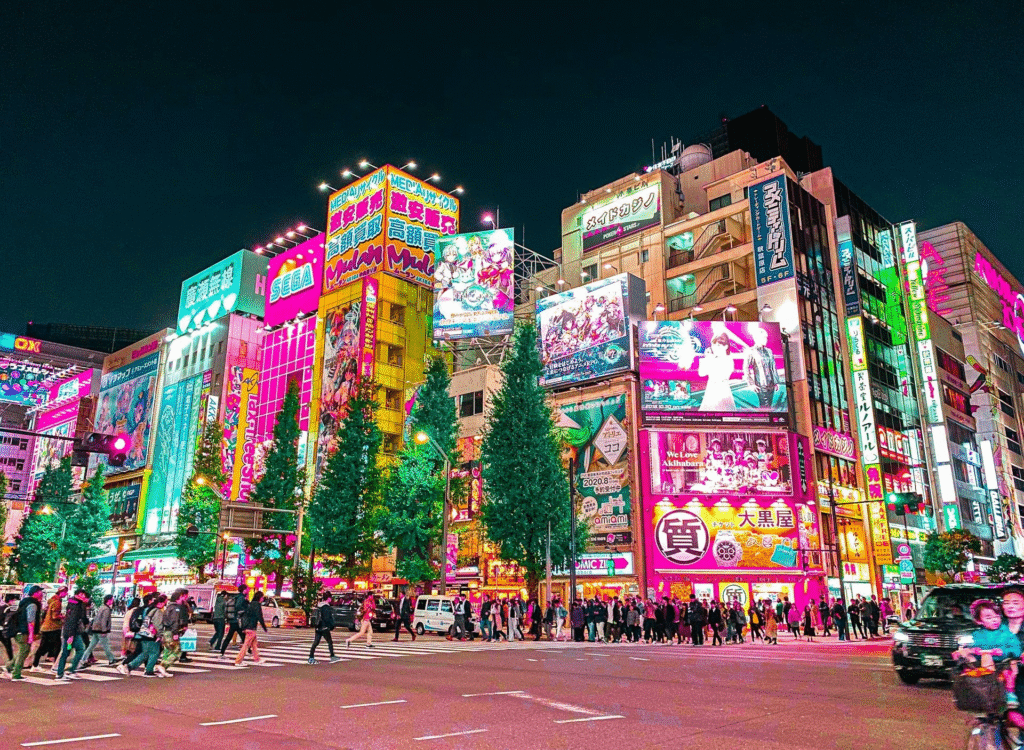
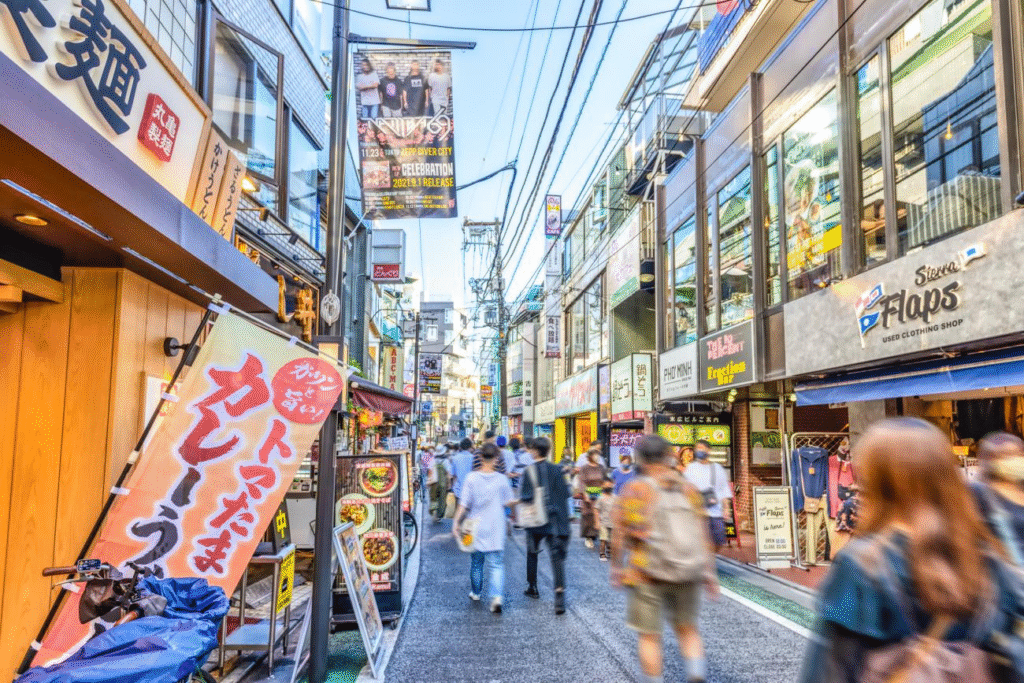
Akihabara, affectionately known as “Akiba,” stands as a vibrant district in Tokyo, celebrated worldwide for its dazzling array of shops, themed cafes, and cultural events. It is recognized globally as a symbol of Japanese technological innovation and the epicenter of anime and otaku culture, attracting millions of visitors annually.1 This bustling district offers a colorful glimpse into a unique facet of Japanese life, constantly evolving yet deeply rooted in its distinct history.2 The defining characteristic of Akihabara is its extraordinary capacity for transformation, seamlessly blending its past as a hub for electronics with its present as a global center for pop culture. This dynamic nature underscores its remarkable adaptability to changing trends and societal needs.
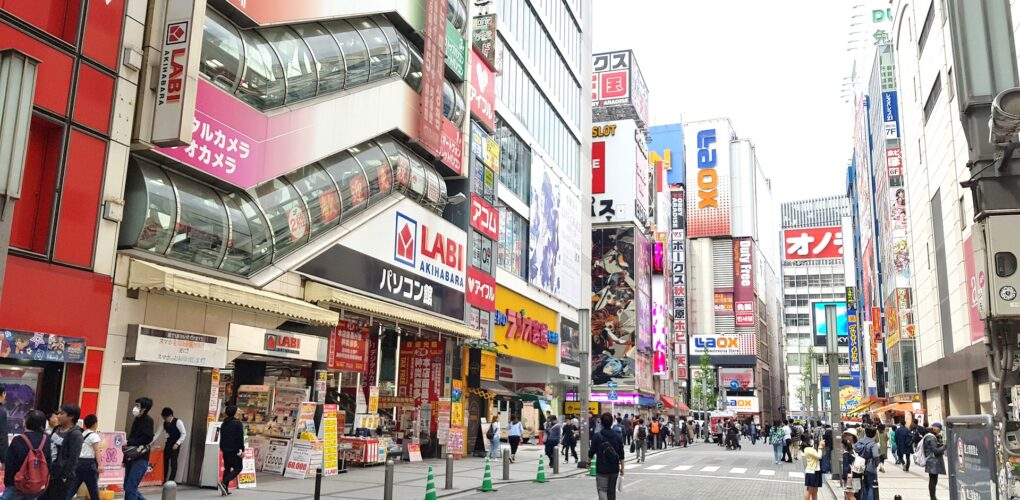
From Post-War Black Market to “Electric Town”: Akihabara’s Historical Evolution
The narrative of Akihabara is one of continuous reinvention, beginning in the crucible of post-World War II Japan. In the immediate aftermath of the war, a period marked by intense rebuilding and innovation, Akihabara first gained prominence as a vital black market for surplus radio parts.1 This informal economy, operating in the absence of a strong centralized government, allowed the district to flourish as a market city, laying the foundational bricks for its future as a central hub for electronics.1 This early period fostered a “culture of hustle,” characterized by a pragmatic approach to commerce that would subtly influence the district’s development for decades to come.1
As Japan’s economy experienced a rapid boom, Akihabara transitioned from its black market origins into the renowned “Electric Town” (Akihabara Denki Gai). By the 1950s, it had become the premier destination for cutting-edge household electronics such as washing machines, refrigerators, televisions, and stereos.1 This rapid industrial growth not only brought immense prosperity but also cemented Akihabara’s reputation as Japan’s main technology hub.6 The district became a microcosm of Japan’s post-war economic miracle, embodying the nation’s drive for innovation and technological advancement.
A pivotal shift occurred in the 1980s as the widespread appeal of household electronics began to wane. In response, Akihabara’s shops strategically redirected their focus to home computers, a burgeoning niche market then primarily utilized by specialists and hobbyists.5 This strategic pivot proved instrumental, as it directly attracted a new demographic: computer enthusiasts, who would soon be identified as “otaku”.5 The market quickly adapted to this emerging customer base, whose interests extended deeply into anime, manga, and video games.5 It is notable that the first maid cafés, now a hallmark of modern Akihabara, did not even open their doors until the early 2000s, long after the initial gravitation towards otaku culture had begun.6
The district’s remarkable adaptability has been a cornerstone of its survival and transformation. Each major historical pivot—from a black market to an electronics hub, and subsequently to a center for otaku culture—demonstrates Akihabara’s exceptional capacity to reinvent itself in response to evolving technological and societal landscapes. This continuous thread of niche market adaptation is a defining characteristic. The initial black market and subsequent electronics hub fostered an environment of technical specialization and a consumer base seeking specific, often high-tech, goods. When the mainstream electronics market matured, Akihabara’s existing infrastructure and customer base were uniquely positioned to cater to the emerging “hobbyist” market of home computers. This, in turn, directly attracted the nascent otaku community, who were inherently drawn to these technological and entertainment niches. The district’s history of catering to specialized interests made it the natural breeding ground for otaku culture, demonstrating a continuous thread of niche market adaptation.
Furthermore, Akihabara’s economic resilience is not merely about adapting to new products; it is about successfully identifying and capitalizing on emerging cultural trends. By becoming the “heart” of otaku culture, it transformed a niche interest into a significant economic driver and a powerful tool for cultural diplomacy, often referred to as “Soft Power”.3 This illustrates how a district can pivot from a hardware-centric economy to one built on cultural capital and experiential commerce, influencing global perceptions and generating substantial revenue.
| Year/Period | Key Event/Development | Significance/Impact |
| 1869 | Area destroyed by fire, Akiba Shrine built. | Origin of the name “Akihabara”.5 |
| 1888-1890 | Akihabara Station built and opened for freight. | Became a major freight transit point, leading to a vegetable and fruit market.5 |
| Post-WWII | Emergence of black market for radio parts. | Foundation for electronics hub, fostering a “culture of hustle”.1 |
| 1950s | Transformation into “Electric Town.” | Premier destination for household electronics.1 |
| 1980s | Shift to home computers. | Attracted early “otaku” and laid groundwork for pop culture focus.5 |
| Late 1990s-Early 2000s | Focus shifts to anime/manga, first maid cafes open. | Cemented role as otaku culture center.6 |
| 2008 | Akihabara Massacre. | Catalyst for societal introspection on mental health and safety, impacting district’s atmosphere.1 |
The Soul of Modern Tokyo
Welcome to Akihabara, Tokyo’s vibrant nexus of technology and pop culture. Known as “Akiba,” this district is a dazzling world of neon-lit towers, bustling arcades, and themed cafes. This guide provides an interactive journey through its history, attractions, and cultural heartbeat, revealing how a post-war market transformed into the global epicenter of “otaku” life.
A District in Constant Motion
Akihabara’s story is one of remarkable reinvention. From a humble black market to a global cultural phenomenon, its ability to adapt has been its greatest strength. Click on the different eras below to see how Akihabara has transformed through the decades.
Explore the Heart of Akiba
This section is your interactive map to Akihabara’s most iconic destinations. Whether you’re a tech enthusiast, anime collector, retro gamer, or just curious, use the filters below to find your perfect spot. Click on any card to see more details about the location.
The Global Otaku Epicenter
Akihabara is the heartland of “otaku” culture, a term that has evolved from a niche descriptor to a globally recognized symbol of passionate enthusiasm. This section explores what otaku culture is and how Akihabara became its most important stage, turning specialized hobbies into a powerful form of cultural expression.
From Niche to “Soft Power”
Originally describing introverted fans of anime and games, the term “otaku” has shed its negative image. Today, it represents a vibrant, global community of passionate enthusiasts. Japan has recognized this subculture’s economic and cultural influence, known as “Soft Power.”
Akihabara was instrumental in this shift. By providing a physical space for fans to gather, share interests, and consume specialized goods, it legitimized these hobbies. The district serves as a gateway for international fans, hosting events and exporting Japanese pop culture worldwide, proving that cultural passions can drive significant economic and diplomatic value.
Facets of Akihabara’s Otaku Culture
A Practical Guide for Visitors
Planning a trip to Akihabara? Here’s what you need to know to make your visit smooth and enjoyable. From transportation routes to the best times to visit, this section provides essential tips for navigating the electric town.
Getting There
- JR Lines: Yamanote, Keihin-Tohoku, and Sobu lines all stop at Akihabara Station.
- Subway: Hibiya Line (Akihabara Stn.) or Ginza Line (Suehirocho Stn.).
- From Tokyo Stn: 3 min ride on JR Yamanote line (¥150).
- From Shinjuku Stn: 17 min ride on JR Sobu line (¥180).
When to Go
- Most shops open around 10:00 or 11:00 AM. Arrive earlier to avoid crowds.
- The district is especially vibrant and picturesque at night with all the neon lights.
- Weekdays are generally less crowded than weekends.
- For the biggest crowds and highest energy, visit on a weekend afternoon.
Pro Tips
- Sunday Pedestrian Paradise: The main street (Chuo Dori) is closed to cars on Sundays (13:00-18:00), making it perfect for exploring.
- Explore Backstreets: The best deals and most unique shops are often found in the smaller alleyways, not on the main road.
- Bring cash, as some smaller, older shops may not accept credit cards.
The Other Side of Akiba
Akihabara’s dazzling facade hides a more complex reality. The district faces ongoing challenges, from its “darker history” to the pressures of the digital age. This section explores the shadows and the future of Akiba, revealing a district that continues to evolve in the face of adversity. Click each heading to learn more.
The Rise and Nuances of Otaku Culture: Akihabara as its Global Epicenter
The term “Otaku” traditionally described introverted individuals possessing an in-depth knowledge of video games, anime, and related subcultures.3 However, its perception has undergone a significant evolution. In recent times, Japan has increasingly recognized the “Soft Power” and economic potential embedded within this subculture, leading to the term “Otaku” shedding many of its negative connotations.3 It now increasingly represents a generation of passionate, engaged, and uniquely expressive enthusiasts, both Japanese and international.3 The definition has broadened to include enthusiasts of any kind, provided they are actively involved in their passion.3
Akihabara has been instrumental in the rise of otaku culture, serving as a primary gathering place for fans worldwide to connect and share their interests.7 Its abundance of specialized shops, catering to every facet of the subculture, actively attracts international visitors seeking authentic experiences. This magnetic pull has played a crucial role in internationalizing and normalizing the otaku lifestyle on a global scale.7
The district plays a crucial role in promoting cultural exchange, effectively acting as a gateway for global fans to engage deeply with Japanese pop culture.7 It not only showcases local anime and manga but also frequently hosts international events that draw creators and fans alike, fostering a deeper understanding and appreciation of Japanese culture worldwide.7 Economically, Akihabara’s unique position as a dual center for electronics and otaku culture has had a profound impact, both locally and globally. It supports a multitude of businesses, from small specialized shops to large retail chains, all catering specifically to fans of anime, electronics, and gaming. Globally, Akihabara has directly contributed to creating demand for Japanese pop culture products, influencing trends in merchandise, media consumption, and even tourism, as fans actively travel to experience its vibrant atmosphere.7
Otaku culture, once a niche interest, has transformed into a significant global phenomenon, largely propelled by Akihabara. The district’s commercial success is intrinsically intertwined with its cultural identity. The commercial success and global reach facilitated by Akihabara’s specialized businesses—including manga stores, arcades, and maid cafes—have directly contributed to the legitimization and positive re-evaluation of otaku culture within Japan and internationally.3 By demonstrating significant economic impact and global appeal, what was once considered a niche or even socially awkward subculture has evolved into a recognized form of “Soft Power.” Akihabara serves as the physical manifestation of this transformation, proving that cultural passions can drive substantial economic and diplomatic value.
Akihabara Today: A Kaleidoscope of Attractions
Akihabara continues to be a vibrant and multifaceted district, offering a wide array of attractions that cater to diverse interests, from cutting-edge technology to niche subcultures. The sheer diversity of attractions caters to a wide range of interests, from serious collectors to casual visitors, highlighting Akihabara’s ability to offer specialized experiences within various subcultures.
Electronics and Gadgets
The enduring legacy of “Electric Town” remains prominent, with major electronics stores continuing to draw visitors. Yodobashi Camera, a massive 9-story establishment, offers an extensive range of products from cameras and electronic devices to figurines and plastic models, providing tax-free counters and English support for foreign tourists.8 Other significant electronics retailers include Sofmap, which operates several specialized shops focusing on computers, software, and amusement (11:00 to 20:00); Laox, offering electronics alongside hobby and game-related products (9:30 to 19:30); and Akky, specializing in tax-free goods for overseas use (9:30 to 20:00).8 While the main boulevard is a spectacle of illuminated billboards and J-pop tunes, visitors often discover better deals and unique finds by exploring the lively backstreets.6
Anime, Manga, and Collectibles
Akihabara is saturated with multi-story anime shops, many as large as apartment blocks, brimming with merchandise.6
- Radio Kaikan: This iconic ten-story building, distinguished by its striking yellow façade, was originally an electronics outlet but has transformed into a “geek sanctuary”.6 It houses over 30 stores packed with figurines from major anime series, manga comics, trading cards, and various gadgets, some of which cater to niche, adult interests.6 Guided tours frequently commence here to assist visitors in navigating the overwhelming selection.6
- Mandarake: Located slightly further from the train station, this is Japan’s largest Mandarake store, an eight-floor second-hand chain that serves as a treasure trove for serious collectors of anime, manga, toys, and games, including rare and non-Japanese items such as vintage GI-Joe action figures.6
- Animate Akihabara: As one of Japan’s largest retailers for anime, video games, and manga, Animate maintains two locations in Akihabara, offering a wide range of movies, comic books, and related goods.10
- AmiAmi: Another significant chain store for anime enthusiasts with a notable presence in Electric Town.6
Gaming Paradises
Akihabara is a veritable haven for gamers, featuring towering arcades and highly specialized shops.
- Arcades: Known as “game centers” in Japan, these establishments are often several stories high, with different types of machines on each floor.10 Notable examples include the four Club Segas, which offer a diverse range of entertainment from UFO Catchers to VR games.10 Taito HEY (Hirose Entertainment Yard) is celebrated for its late 90s era titles and popular Gundam Versus games.10 Tokyo Leisure Land, while not the largest, houses the latest releases and tends to be less crowded.10
- Gachapon Machines: Countless gachapon machines are ubiquitous throughout the district, dispensing tiny capsule toys, keychains, and other unique souvenirs. This phenomenon represents a billion-dollar industry in Japan.6
- Super Potato: Considered a retro gamer’s paradise, this shop boasts one of the largest collections of old games and consoles, including titles for Atari, NES, SNES, Gameboy, N64, Sega Saturn, early Playstations, Neo Geo, and even vintage gadgets like the Nintendo Virtual Boy.6 Its third floor features original arcade cabinets where visitors can play classics such as Street Fighter II for a small fee.6
- Surugaya Specialty Shop: An iconic store for gamers, primarily dealing in used and retro games and reportedly setting pricing standards for second-hand dealers.10
Themed Cafes and Unique Entertainment
Beyond traditional shopping, Akihabara offers deeply immersive themed experiences.
- Maid Cafes: A prominent element of Akihabara’s “kawaii” (cute) culture.6 Maidreamin is the largest and most famous chain, where waitresses in French maid uniforms enthusiastically serve guests, perform choreographed dances, and engage in interactive rituals.6 Other popular options include @Home Cafe 8 and CURE MAID CAFÉ, which opened in 2001 as Japan’s first maid cafe, known for its refined service and authentic British-style menus.9 Most maid cafes are designed to be family-friendly, offering lighthearted entertainment suitable for all ages.11
- Other Concept Cafes: The trend of themed dining extends to diverse concepts, including:
- Seiyu no Tamago: Where customers can interact with rookie voice actors.12
- Train-Izakaya LittleTGV: A railway-themed izakaya (Japanese pub) where staff dress as train conductors.12
- Shinobazu Ninja Cafe Akihabara Manseijo: Featuring kunoichi (female ninja) waitresses and live ninja performances, including board breaking and light shows.12
- Mononopu: Catering to Japanese history buffs, with maids dressed in Sengoku period garb.12
Other Niche Offerings
- Don Quijote: A 24-hour discount store chain carrying a vast assortment of goods, from groceries and toys to electronics and high-end fashion. Its Akihabara branch notably houses the AKB48 girl pop group theater and a branch of the @Home Cafe.8
- M’s: Described as potentially the world’s largest sex shop, M’s features seven floors offering a wide range of adult products, from standard items to niche fetish goods, alongside an extensive collection of cosplay costumes, including schoolgirl uniforms.6
- Creepy Vending Machine Corner: A unique and somewhat dilapidated spot featuring vending machines selling unusual items like canned chicken yakitori or plastic beetles.6
- Manseibashi: An old train bridge repurposed into a stylish complex of shops and restaurants within its red-brick vaults. This area offers a distinct contrast to the bustling Electric Town, featuring pop-ups, design stores, a microbrewery, and more upscale dining options, some with waterside terraces.6
- Asobiba Akihabara Field: An indoor airsoft survival game field, providing a real-world gaming experience that contrasts with the district’s virtual offerings.10
Akihabara has moved beyond simply selling goods to offering highly specialized, immersive experiences. This reflects a broader trend in consumer behavior towards an “experience economy,” where the value lies not just in the product but in the unique interaction or environment. The proliferation of hyper-niche concept cafes and highly specialized gaming venues demonstrates Akihabara’s mastery of this model, catering to increasingly granular fan interests and creating unique, memorable engagements that cannot be replicated by online shopping.
| Category | Example Attraction/Shop | Unique Features/Experience | General Hours (if available) |
| Electronics | Yodobashi Camera | 9-story store, tax-free, English support, wide range of electronics and hobbies | 9:30-22:00 8 |
| Anime/Manga | Radio Kaikan | Iconic 10-story building, figurines, manga, trading cards, niche items | 10:00-20:00 6 |
| Gaming | Super Potato | Retro games, vintage consoles, playable arcade cabinets | 11:00-20:00 6 |
| Maid Cafes | Maidreamin | Largest chain, French maid cosplay, choreographed dances, interactive experience | Varies (e.g., 10:00-22:00) 6 |
| Concept Cafes | Shinobazu Ninja Cafe | Ninja-themed, kunoichi waitresses, live ninja performances | Varies 12 |
| Unique Shops | M’s | 7-floor adult shop, extensive cosplay costumes | Varies 6 |
| Discount/Variety | Don Quijote | 24-hour discount store, AKB48 theater, @Home Cafe branch | 24 hours 8 |
| Repurposed Spaces | Manseibashi | Old train bridge repurposed into stylish shops, restaurants, microbrewery | Varies 6 |
Navigating Akihabara: Practical Tips for Visitors
Effective planning is essential for a comprehensive and enjoyable experience in Akihabara, particularly concerning crowd management and understanding shop hours.
Transportation Options to Akihabara Station
Akihabara Station serves as a major transportation hub, offering convenient access via several JR lines, including the Yamanote, Keihin-Tohoku, and Sobu lines, as well as the Hibiya Subway Line.8 Additionally, Suehirocho Station on the Ginza Subway Line is located near the northern end of the district, providing another entry point.8
- From Tokyo Station: Akihabara is situated just two stations north of Tokyo Station, accessible via the JR Yamanote Line or JR Keihin-Tohoku Line. This journey typically takes approximately 3 minutes and costs 150 yen one way.8
- From Shinjuku Station: Travelers can take the JR Chuo Line (orange rapid service) from Shinjuku to Ochanomizu (approximately 10 minutes), then transfer to the JR Sobu Line (yellow local service) for one additional station to Akihabara (about 2 minutes). Alternatively, a direct yellow-colored train from Shinjuku to Akihabara takes about 17 minutes. The one-way fare for either option is 180 yen.8
General Operating Hours for Major Establishments
While specific hours can vary by establishment, most shops and arcades in Akihabara typically open around 10:00 AM.9
| Store Name | Primary Focus | General Operating Hours |
| Sofmap | Computers, software, amusement | 11:00 to 20:00 8 |
| Laox | Electronics, hobby, game, souvenirs | 9:30 to 19:30 8 |
| Akky | Tax-free electronics for overseas use | 9:30 to 20:00 8 |
| Yodobashi Camera | Computers, games, watches, cameras | 9:30 to 22:00 (restaurants from 11:00) 8 |
| Radio Kaikan | Anime, manga, collectibles | 10:00 to 20:00 8 |
| Super Potato | Retro video games and consoles | 11:00 to 20:00 8 |
| Gamers | Anime, manga, video games, CDs | 10:00 to 22:00 (to 21:00 on weekends) 8 |
| Mandarake | Pre-owned manga, figurines, collectibles | 12:00 to 20:00 8 |
| Don Quijote | Discount store (various goods) | Open 24 hours 8 |
| @Home Cafe | Maid Cafe | 11:00 to 22:00 (10:00-22:00 weekends) 9 |
| CURE MAID CAFÉ | Maid Cafe | 11:00 to 20:00 9 |
Tips for Navigating the District and Avoiding Crowds
Visitors are encouraged to explore the lively backstreets, as these often yield better deals and unique discoveries compared to the main thoroughfares.6 A significant feature for visitors is the closure of Chuo Dori, the main street, to car traffic on Sundays from 13:00 to 18:00 (or until 17:00 from October to March). This creates an expansive pedestrian-friendly environment, allowing for more relaxed exploration.8 It is recommended to arrive around 9:00 AM to enjoy a relaxed breakfast before most shops open at 10:00 AM, as the morning hours tend to be relatively uncrowded.9 The district’s neon lights and vibrant atmosphere transform Akihabara into a unique and unforgettable experience at night.11
The Sunday pedestrian zone is not merely a traffic regulation but represents a deliberate urban planning strategy designed to enhance the visitor experience. Recognizing Akihabara’s identity as a destination for leisurely exploration and immersive cultural engagement, the city transforms the main thoroughfare into a vast, safe, and vibrant public space. This allows visitors to “walk around aimlessly for a couple of hours and enter every store that piques your interest” 6 without the impediment of vehicular traffic, directly contributing to the district’s unique, lively atmosphere and making it more accessible and enjoyable for its primary audience.
To avoid the busiest periods, travelers might consider visiting during the rainy season (June to mid-July) or in winter (January to early March), when prices for accommodations and flights may also be lower.13 Conversely, the high season for Japan tourism, typically from mid-March to mid-May (cherry blossom season) and September to mid-November (autumn foliage), should be approached with meticulous planning, as attractions can be extremely crowded and prices higher.13 Golden Week, a series of national holidays from late April to early May, is particularly busy with domestic travelers and is generally advised to be avoided if possible due to extreme crowds and significantly inflated prices.13 Weekends, in general, tend to be particularly crowded with local fans.9
The Shadows of Akihabara: Addressing its Complexities
Beneath Akihabara’s vibrant and often dazzling facade lies a complex and at times “darker history”.1 Its origins as a post-WWII black market fostered a “culture of hustle” that operated on the fringes of legality, setting a precedent for a competitive commercial environment.1 The subsequent transformation into “Electric Town” brought fierce competition among businesses, often leading to a relentless pursuit of innovation that, in some instances, came at the expense of workers’ rights and mental well-being. This contributed to a culture of overwork and stress, reflecting broader societal pressures within Japan.1 Furthermore, the intense devotion to otaku culture, while fostering a strong sense of community, has also been associated with extreme cases of social withdrawal, known as “hikikomori,” a phenomenon reflective of broader societal pressures in Japan related to work, school, and expectations.1
Recent trends highlight a concerning rise in aggressive marketing tactics, known as kyaku-hiki, where employees persistently attempt to lure passersby into stores.2 This practice, though technically illegal, has become more common, particularly with the decline of traditional maid cafes and the emergence of less reputable establishments.2 This shift in atmosphere has led some visitors to draw comparisons between parts of Akihabara and Kabukicho, Tokyo’s red-light district, prompting some fans to seek safer and more welcoming alternatives.2 The continuity between the “culture of hustle” from the black market days and the current prevalence of aggressive, sometimes illegal, marketing tactics suggests a deeply ingrained commercial ethos within Akihabara. This is not merely a new problem but a persistent characteristic that emerges in different forms as the district evolves. It implies that the historical foundations of unregulated, competitive commerce continue to manifest, creating challenges for the district’s public image and visitor experience.
As Akihabara solidified its position as a global epicenter for otaku culture, it also witnessed the proliferation of businesses catering to increasingly niche interests, including certain maid cafes and adult entertainment venues.1 While many establishments operate with integrity, the district has faced criticism for practices that allegedly exploit vulnerable workers, particularly young women. This highlights some “darker facets of its booming entertainment industry” and has prompted calls for better regulation and protection for workers within these sectors.1
The “darkest day in Akihabara’s history” occurred on June 8, 2008, when a stabbing spree resulted in seven deaths and numerous injuries.1 This tragic event profoundly shocked Japan and the international community, casting a long shadow over the district. It served as a “wake-up call,” prompting a nationwide discussion on critical issues such as mental health, social isolation, and the pervasive pressures of modern life in Japan.1 In the years following the incident, concerted efforts have been made to improve mental health services, increase public awareness, and foster a more inclusive society, with Akihabara often at the heart of these initiatives.1 The incident also led to the temporary cancellation of pedestrian zones and the implementation of ongoing restrictions on street performances, which diminished some of the lively atmosphere that once characterized the area.2 Akihabara, as a highly concentrated hub of specific subcultures and intense commercial activity, serves as a poignant microcosm for larger societal challenges facing Japan. Issues like social isolation (
hikikomori) and mental health, while not exclusive to Akihabara, are amplified and brought to the forefront within its unique environment. The 2008 massacre, originating from an individual’s deep-seated issues, forced a national reckoning with these problems, demonstrating how the district, despite its vibrant facade, can reflect and even catalyze discussions on the darker aspects of modern Japanese society.
Akihabara’s Evolving Future: Challenges and Reinvention
Recent trends suggest that Akihabara may be experiencing a shift in its allure as the singular “ultimate otaku paradise”.2 Several iconic stores, including Tora no Ana (which relocated to Ikebukuro in 2022), Niku no Mansei, Yellow Submarine Scale Shop, and the Gundam Cafe (all closed between 2022 and 2023), have ceased operations or moved, signaling a notable change in the neighborhood’s identity.2 The pervasive rise of e-commerce has also meant that many collectors can now purchase goods online, reducing the necessity of physical visits to the district.2 Furthermore, the evolution of gaming, particularly the increasing popularity of smartphone gaming and social media-based platforms, has diminished the demand for packaged software and large-scale, in-person release events that once drew significant crowds to Akihabara for
bishojo games.2 This digital shift has fundamentally reshaped how otaku engage with their hobbies, and Akihabara has faced challenges in adapting to these changes.
A significant emerging trend is the growing popularity of “holy sites” (seichi) across Japan.2 These are real-world locations that serve as settings for popular anime, manga, and games (e.g., Numazu for
Love Live! Sunshine!!). These sites offer immersive experiences that Akihabara, as a commercial district, cannot replicate.2 This reflects a broader shift in otaku culture, where fans are increasingly drawn to experiences and deeper connections with their favorite stories rather than simply acquiring merchandise.2 The decentralization of otaku engagement, driven by the convenience of digital commerce and the allure of geographically dispersed “holy sites” offering authentic, immersive experiences, means Akihabara’s traditional dominance as the
sole hub for otaku culture is being challenged. To remain relevant, it must pivot further into providing unique, in-person experiences and foster deeper connections, mirroring the trend seen in “holy sites.” Its future lies in adapting to this experiential demand rather than just being a retail center.
Despite these challenges, Akihabara is far from “dying” and possesses a well-documented history of weathering significant transformations.2 Tokyo as a whole is undergoing substantial urban redevelopment projects, though not all are directly within Akihabara’s immediate vicinity.14 However, specific to Akihabara, developers are actively finding new life in previously underutilized urban spaces, particularly beneath the city’s extensive rail network.16
- 2k540: A commercial complex situated between Okachimachi and Akihabara stations, discreetly tucked away from the main thoroughfare, housing various shops and studios.16
- Chabara: A dedicated space for shops selling regional food products, diversifying the district’s offerings.16
- Okachimachi Ramen Yokocho: Features an array of ramen shops specializing in styles from across Japan.16
- Campass: An unexpected campsite facility located beneath the tracks, designed to help novice campers practice and become comfortable with outdoor vacationing in an urban setting.16
- Seekbase (Akiba Robolabo Meetup): One of the newest tenants, offering robot demonstrations, electric vehicles, and Akihabara-themed tours, specifically catering to inbound travelers seeking unique experiences.16
These innovative urban redevelopment projects in Akihabara demonstrate a strategic response to the changing commercial landscape and the increasing value of land in Tokyo. By transforming previously overlooked spaces, such as under-track viaducts, into unique commercial and leisure zones, Akihabara is diversifying its appeal beyond its traditional electronics and otaku core. This showcases a forward-thinking urban planning approach that not only addresses the challenges of a maturing market but also creates new revenue streams and attractions, ensuring the district’s continued relevance and adaptability in a highly competitive urban environment. This serves as a model for how cities can creatively repurpose existing infrastructure to meet evolving consumer demands.
Conclusion: Akihabara’s Enduring Legacy and Future Path
Akihabara remains a district defined by its extraordinary capacity for transformation. From its origins as a post-war black market for radio components, through its heyday as “Electric Town,” to its current status as a global nexus for otaku culture, Akihabara has consistently reinvented itself. It stands as a unique urban experience where technological innovation, subcultural passion, and commercial dynamism converge.
Despite facing contemporary challenges stemming from digital shifts, evolving consumer behaviors, and persistent social issues, Akihabara continues to attract visitors from around the world. Its legacy as a global symbol of Japanese pop culture remains firmly intact.2 The ongoing urban revitalization projects, particularly the creative repurposing of underutilized spaces, coupled with its inherent adaptability, strongly suggest that Akihabara will continue to evolve. It is poised to find new ways to engage diverse audiences and maintain its position as a vital cultural landmark, even as its role shifts from being the sole “otaku paradise” to a more diversified hub of niche experiences and urban innovation. Akihabara’s future will likely be characterized by its continued ability to blend its rich history with forward-thinking adaptations, ensuring its enduring relevance in the global cultural landscape.
Works cited
- The Dark History of Akihabara – Joybox, accessed June 29, 2025, https://joyboxglobal.com/blog/culture/the-dark-history-of-akihabara
- Akihabara: Japan’s Geek Capital Losing Its Shine? – Geinokai BIJ …, accessed June 29, 2025, https://geinokai.jp/blog/2024/12/01/akihabara-japans-geek-capital/
- Activity in Japan: Akihabara, the Otaku capital | Japan Experience, accessed June 29, 2025, https://www.japan-experience.com/activities/tokyo/akihabara-the-otaku-capital
- miniakihabara.com, accessed June 29, 2025, https://miniakihabara.com/blogs/akihabara/akihabara-became-hub-anime-culture#:~:text=The%20story%20of%20Akihabara%20began,as%20a%20center%20of%20electronics.
- Akihabara – Wikipedia, accessed June 29, 2025, https://en.wikipedia.org/wiki/Akihabara
- Akihabara: The Ultimate Guide to Tokyo’s Gaming and Anime …, accessed June 29, 2025, https://www.trotop.be/en/akihabara-2/
- Akihabara – (History of Japan) – Vocab, Definition, Explanations …, accessed June 29, 2025, https://library.fiveable.me/key-terms/history-japan/akihabara
- Akihabara – Tokyo Travel – Japan Guide, accessed June 29, 2025, https://www.japan-guide.com/e/e3003.html
- Half Day Trip to Akihabara: Quick Itinerary to Tokyo’s Otaku Culture – Magical Trip, accessed June 29, 2025, https://www.magical-trip.com/media/half-day-trip-to-akihabara-quick-itinerary-to-tokyos-otaku-culture/
- Things to Do in Akihabara | All Japan Tours, accessed June 29, 2025, https://alljapantours.com/japan/anime/recommendations/Things-to-do-in-akihabara-anime/
- Perfect Day in Akihabara: Your Ultimate Travel Guide – Simify, accessed June 29, 2025, https://simify.com/blogs/travel/perfect-day-in-akihabara
- Not Just Maid Cafes! 4 Quirky Akihabara Cafes for Fans of Japanese Subculture, accessed June 29, 2025, https://livejapan.com/en/in-tokyo/in-pref-tokyo/in-akihabara/article-a0003245/
- The Best, Worst, and Most Affordable Times to Visit Japan – Travel + Leisure, accessed June 29, 2025, https://www.travelandleisure.com/travel-tips/best-time-to-visit-japan
- Transforming Cities: The high rises built for the future | C40 Cities & BBC StoryWorks, accessed June 29, 2025, https://www.c40.org/case-studies/transforming-cities-tokyo-modern-city/
- Tokyo’s Major Redevelopment Projects Set to Transform the City in 2025, accessed June 29, 2025, https://app.ina-gr.com/en/archives/tokyo-redevelopment-projects-2025-summary-guide
- Revitalizing the space under Tokyo’s train tracks – The Japan Times, accessed June 29, 2025, https://www.japantimes.co.jp/life/2025/06/16/style-design/under-railway-tracks-tokyo/