If you’re seeking the beating heart of Tokyo’s counterculture, a place where vintage vibes meet artistic innovation and the aroma of curry fills the air, then Shimokitazawa, or “Shimokita” as the locals affectionately call it, is your ultimate destination. As a seasoned Tokyo explorer, I can tell you there’s nowhere quite like it. This isn’t just a neighborhood; it’s a living, breathing testament to organic growth, community spirit, and an unwavering commitment to all things independent.
Tokyo’s Bohemian Heartbeat
Explore the story of Shimokitazawa, a neighborhood defined by its independent spirit, human-scale streets, and a vibrant counterculture. It’s a place where vintage fashion, indie music, and community activism create a unique urban tapestry.
~6 mins
from Shibuya
100s
of Indie Shops
“Human Scale”
Urban Vibe
An Organic History
Shimokitazawa’s unique character wasn’t planned; it grew organically from historical events. This timeline highlights the key moments that shaped its journey from farmland to a countercultural hub.
The Pillars of Culture
Shimokitazawa’s identity is built on four key cultural pillars. Use the filters to explore the venues, shops, and tastes that form the soul of the neighborhood.
The Crossroads: Preservation vs. Progress
Shimokitazawa’s greatest challenge is navigating the tension between preserving its unique, organic charm and the pressures of modern urban development. This conflict defines its present and future.
The Threat of Homogenization
Redevelopment plans since 2004, including the undergrounding of the Odakyu Line, sparked fears of a “crassly commercialized” future. Long-time patrons note rising prices and a shift from “actual thrifting” to “curated vintage,” fearing the area is becoming more “corporate and cleaned up,” losing its raw, accessible charm.
The Spirit of Preservation
In response, a powerful community movement emerged, asserting the “right to the city.” New developments like Bonus Track and Mikan Shimokita are attempting a new model—”creative placemaking” that fuses modern ideas with cultural preservation, offering lower rents and community spaces to keep the independent spirit alive.
Shimokita vs. The World
How does Shimokitazawa stack up against other famous Tokyo neighborhoods? Here’s a look at what makes it a unique alternative.
Shimokita’s Soul: Where History Meets Hip
Shimokitazawa (下北沢), nestled in Tokyo’s Setagaya ward, literally translates to “lower Kitazawa,” hinting at its humble beginnings as agricultural land, crisscrossed by the Kitazawa river. Today, its pulse quickens around Shimo-Kitazawa Station, a vital junction for the Odakyu Electric Railway and Keio Inokashira Lines. A mere 6-minute subway ride from the bustling streets of Shibuya and just 10 minutes from Shinjuku, Shimokita’s convenient accessibility belies its wonderfully unique, off-the-beaten-path charm.
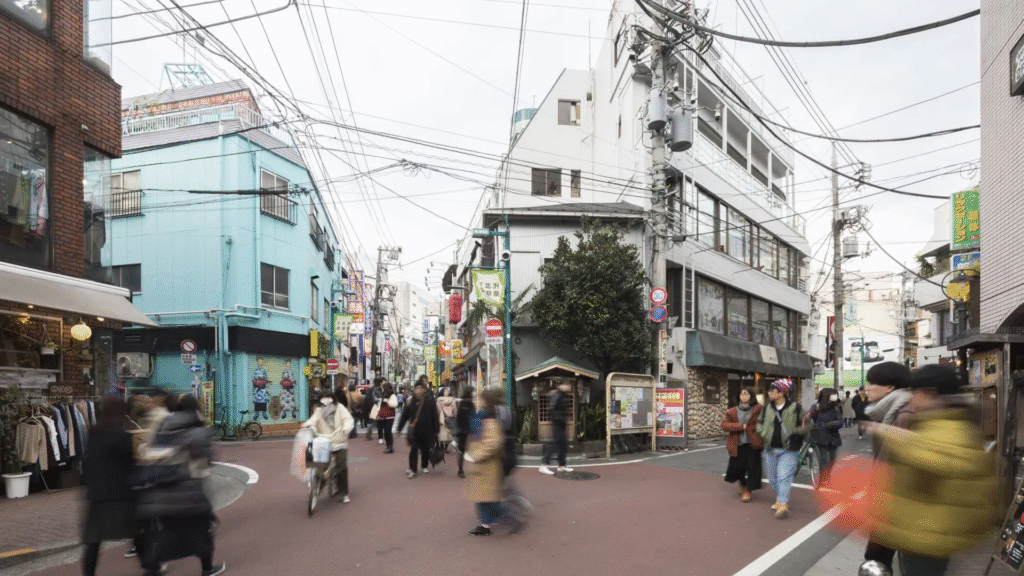
Forget the towering skyscrapers and expansive commercial complexes that dominate much of Tokyo. Shimokita thrives on a “human-scale” environment. Its labyrinthine network of narrow, atmospheric alleys, where car access is often restricted, actively encourages exploration and discovery. This unique urban morphology, characterized by low-rise buildings and small shop units, has organically nurtured a thriving counterculture. It’s a magnetic force for musicians, artists, students, and anyone drawn to authentic Japanese youth subcultures. This “chaotic environment,” far from being a detriment, has paradoxically become its greatest asset, fostering an intimacy and sense of community that larger, planned developments often lack.
From Fields to Bohemian Fields: Shimokita’s Fascinating Evolution
Shimokita’s story is one of fascinating transformation, shaped by resilience and necessity.
The Great Kanto Earthquake and Post-War Black Markets
Before the roar of trains and the hum of independent businesses, Shimokitazawa was primarily agricultural land. However, the devastating Great Kanto Earthquake of 1923 became a pivotal turning point. Residents, seeking refuge from the city’s vulnerabilities, migrated here, sparking Shimokita’s transition from rural to residential. The opening of the Odakyu Odawara line in 1927 further fueled this demographic shift, drawing more Tokyoites seeking suburban living with easy city access.
Following World War II, Shimokitazawa truly found its entrepreneurial spirit, emerging as one of Tokyo’s most significant black markets, especially near the present-day East Exit of the station. This informal economy, supplying everything from American blue jeans to candy, laid the groundwork for the area’s commercial vibrancy. By the 1950s and ’60s, legitimate retail began to flourish, organically shaping the city’s layout from its farm-based origins to a shop-centric design. This unplanned growth, stemming from necessity, inadvertently created a niche for the independent businesses and countercultural elements that define it today.
The Rise of a Countercultural Epicenter
It was in the 1950s and ’60s that Shimokita’s identity as a countercultural hub truly solidified. The relatively low rents during the 1960s and 70s acted as a siren call for young people, artists, and musicians, offering affordable spaces away from the gentrifying pressures of Shibuya and Shinjuku. This influx directly led to a proliferation of live music venues, bars, and independent theaters, cementing Shimokita’s artistic soul. The historic Honda Gekijō theater, a haven for numerous underground theater troupes and host of year-round festivals, became central to this burgeoning scene.
The Vibrant Pillars of Shimokita’s Culture
Shimokitazawa isn’t just a place; it’s an experience built on a few core cultural pillars that you absolutely have to dive into.
Vintage Fashion & Thrifting: A Treasure Hunter’s Dream
Shimokita is unequivocally a “thrift store goldmine” and Tokyo’s unrivaled hub for vintage shopping. Its density of second-hand and vintage clothing stores is unparalleled, offering a distinct vibe from the independent backstreets of Ura-Harajuku or Koenji. The prevailing “Shimokita-style” is deeply rooted in reuse and recycling, a direct legacy of the bustling second-hand markets that thrived after World War II.
Here are some essential stops for your vintage hunt:
- New York Joe Exchange: Housed in a former public bathhouse, this spacious store is famed for its high stock turnover, supplied by local fashionistas. Don’t miss their 50% off sale on the first Sunday of every month – perfect for unearthing unique Japanese brands or vintage designer pieces.
- Flamingo: You can’t miss its bright-pink neon sign. Flamingo is a household name in the vintage world, offering American retro and vintage Americana across its three Shimokita outlets.
- STICK OUT: For the budget-conscious, this gem famously prices most items at just 800 yen, with sister stores offering even lower prices. It’s an excellent spot for hidden gems, especially menswear.
- Treasure Factory Style (TreFacStyle): Part of a larger chain, its Shimokitazawa location is a standout for major brands (think Nike, Louis Vuitton, Ralph Lauren) at incredibly competitive prices.
- Hickory: One of Shimokitazawa’s oldest used clothing stores, specializing in a curated selection of American outdoor brands like Patagonia and The North Face.
- Ocean Blvd: A fantastic first stop from the station, focusing on a wide variety of preowned women’s clothing, including unique handmade items.
This robust ecosystem of independent shops thrives in a symbiotic relationship with Shimokita’s “bohemian” and “hipster” demographics. These businesses attract those seeking alternative cultural experiences, and in turn, this demographic provides the customer base and cultural capital for them to flourish.
The Dynamic Music Scene: Indie Incubator to Listening Sanctuary
Shimokitazawa has earned its stripes as an “indie music incubator” and “sacred ground” for fans of Japanese indie bands. Its intimate venues foster a powerful connection between artists and their audiences.
Live Houses You Can’t Miss:
- Shelter: An iconic cornerstone (established 1991) of Japan’s punk, rock, and alternative scenes, drawing both local and international acts. It’s a legendary spot with a capacity of around 250.
- 440: An acoustic haven, known for booking low-key folk and singer-songwriter acts. It doubles as a cafe during the day.
- Club Que: Revered for its impeccable professionalism, making it popular with both up-and-coming and established musicians across various genres.
- mona records: A cozy venue with an attached cafe, specializing in acoustic, pop, and indie pop. They actively support young artists and even run their own indie label!
- DaisyBar: A standing venue accommodating around 160 people, noted for the close proximity between audience and performers.
Record Stores and Listening Bars: A Vinyl Lover’s Paradise:
- Flash Disc Ranch: A long-serving independent record store (opened 1982), owned by local historian Masao Tsubaki. A treasure trove of vinyl, vintage electronics, books, and magazines.
- JET SET TOKYO: One of Tokyo’s largest record shops, featuring a vast selection of LPs from Japan and abroad across all genres, attracting serious audiophiles.
- Listening Bars: A unique Tokyo specialty! These small, dimly lit bars like Jazz Haus Posy and Little Soul Cafe are equipped with top-of-the-line sound systems, curated by owners with encyclopedic knowledge of specific genres. Prepare for an immersive music experience.
It’s not just local; Shimokita’s influence ripples far beyond. Its distinct fashion trends even influence Tokyo Fashion Week, and some local designers have expanded nationwide. Its live music venues have served as launching pads for “big-name Japanese bands.” Shimokita truly is a dynamic creative wellspring shaping broader Japanese youth culture.
| Store Name | Key Offerings/Style | Unique Features | Source Snippet ID(s) |
| New York Joe Exchange | Diverse styles, Japanese brands, vintage designer pieces | High stock turnover, former public bathhouse, 50% off first Sunday of month | 2 |
| Flamingo | American retro, vintage Americana, men’s & women’s fashion | Bright pink neon sign, 13 Tokyo stores, sourced from U.S./Europe, vintage shoes | 4 |
| STICK OUT | T-shirts, outerwear, knits, sweaters, denim (menswear focus) | Most items 800 yen, sister stores (STICK OUT3, RUGRAT by STICK OUT) with lower prices | 12 |
| Treasure Factory Style | Major brands (Nike, Louis Vuitton, Ralph Lauren) | Part of larger chain, unbeatable prices for mainstream brands | 12 |
| Hickory | American outdoor brands (Patagonia, North Face, Colombia) | One of Shimokitazawa’s oldest used clothing stores | 14 |
| Ocean Blvd | Preowned women’s clothing, chic dresses, streetwear | Focus on women’s wear, includes handmade items, close to station | 12 |
Theatrical Arts & Independent Cinema: Nurturing Performance and Film
Shimokitazawa has a rich history as a significant center for stage theater, hosting numerous theater festivals throughout the year.
Key Theatrical Venues:
- Honda Gekijō: The historic heart of the district’s vibrant theater scene, a home to many underground theater troupes.
- The Suzunari: An independent theater established in 1981, whose first-floor rehearsal rooms have been innovatively converted into a cluster of quirky mini-bars, cementing Shimokita’s reputation as a “theater town.”
- Other notable venues include Off Off Theater and the Omura Theater (Rakuen/B1 Theater).
The area also nurtures a thriving independent cinema scene:
- Shimokitazawa Tollywood: An independently owned movie theater popular with local youth, known for showcasing films by up-and-coming Japanese directors and foreign animation, often featuring sneak previews.
- K2 Shimokita Cinema: Another key independent cinema contributing to the district’s film culture.
Diverse Culinary & Cafe Culture: From Local Izakayas to Global Flavors
Shimokitazawa is celebrated for its dynamic cafe culture, with a proliferation of coffee bars and cafes seemingly at every corner, attracting both locals and visitors. You’ll find gems like Bear Pond Espresso, Frankie, Maldive, and Sidewalk Coffee Roasters (within Mustard Hotel). For something whimsical, try Tolo Coffee & Bakery, a Ghibli-themed bakery cafe!
But Shimokita’s culinary landscape extends far beyond coffee. It offers an extensive and seemingly endless variety of options, from traditional Japanese fare (izakayas, ramen, sushi) to a wide array of international cuisines (Korean, Vietnamese, Thai, tacos, pizzas, kebabs). A major bonus? The prices are refreshingly reasonable across many establishments.
A Culinary Secret: Shimokita, the “Curry Town”
Yes, you read that right! Shimokitazawa has gained a surprising reputation as a “curry town,” highlighted by its annual Curry Festival held every October. Must-try curry spots include:
- Magic Spice: Famous for its Nepalese and Indian-style curries.
- Rojiura Curry Samurai: Celebrated for its vegetable-rich soup curries.
Izakayas (Japanese-style taverns) form a crucial part of the evening social scene, offering affordable and satisfying dishes to a lively crowd. Mother, a beloved institution operating for over four decades, is a local favorite. You’ll also find Shirube, Tsuge Shimokita Main Branch, and Nomidokoro Tanaka Tanaka. And for those with dietary restrictions, vegan and vegetarian options are readily available.
This unique culinary specialization, particularly the curry scene, is a direct outcome of the neighborhood’s independent spirit. Niche interests and culinary innovations can gain significant traction and community-wide recognition here, showcasing Shimokita’s capacity for micro-cultural specialization beyond just vintage and music.
Urban Evolution: Navigating Modernization and Preservation
Shimokitazawa’s charm is deeply tied to its “organic,” unplanned development. However, like any dynamic urban area, it faces pressures from modernization.
Redevelopment and Community Resistance
In 2004, the Setagaya City Council unveiled a significant redevelopment plan, including proposals for high-rise buildings and road extensions. This immediately sparked considerable controversy among residents and visitors who cherished the neighborhood’s existing charm, fearing a “degrading and crassly commercialized” environment.
A landmark development was the undergrounding of the Odakyu Line rail tracks, completed in March 2013. While this enabled new station entrances and track doubling, paving the way for larger-scale redevelopment of the immediate station area, it also intensified the debate.
Academic research highlights an “anti-redevelopment movement” in Shimokitazawa, focusing not just on typical gentrification concerns (like large-scale displacement) but also on “the rights to enjoy the culture of the city and the rights to speak out about the state of the city” for all stakeholders. Long-term residents lament the perceived loss of “unique restaurants and dirt cheap vintage shops,” observing that vintage prices are no longer “thrifting” prices and the area has become “more curated vintage than actual thrifting” and generally “more built up and corporate and cleaned up.”
New Complexes and Community-Oriented Spaces
Despite these concerns, Shimokita’s resilience shines through. New commercial and community complexes have emerged, aiming to integrate with the existing cultural fabric.
- Mikan Shimokita: A five-story complex opened in March 2022, directly outside the station, integrating shopping, dining, and co-working spaces.
- Bonus Track: A truly innovative community space designed with an “editorial approach.” It features a revolving door of cultural projects, pop-up bars, galleries, and unique businesses like B&B Bookstore (Books & Beer concept), Hakko Department (fermented products), and Pianola Records (used vinyl). Bonus Track even includes “live-and-work” buildings with lowered rental prices to encourage innovation and retain the area’s independent character, explicitly designed to foster community exchange and social initiatives.
This “editorial approach” demonstrates a conscious effort by developers to integrate new commercial spaces in a way that respects and potentially enhances the existing cultural fabric, rather than simply replacing it. It’s a direct response to the community’s concerns, signaling a learning curve in urban planning towards balancing economic growth with cultural preservation.
The Enduring Appeal of Human-Scale Urbanism
Shimokitazawa’s distinct urban character, with its intimate scale, narrow former farm roads, and the organic blend of residential and commercial areas, makes it incredibly walkable. This layout makes driving and parking difficult, further encouraging pedestrian exploration. The prevalence of shops and cafes on the ground floor of residential buildings fosters a strong sense of community and provides easy access to goods and services. This “human scale” is widely regarded as a positive factor, creating a more intimate and engaging connection between people and their surroundings.
Shimokita in the Tokyo Landscape: Unique and Unrivaled
Shimokitazawa stands proudly as a distinct alternative to Tokyo’s more bustling and mainstream commercial and entertainment districts.
Distinguishing Features from Mainstream Hubs
While Shibuya pulsates with “fast fashion, flashy neon signs, and a healthy dose of chaos,” and Harajuku delights with its “kawaii rainbow bonanza” for eccentrics and subcultures, Shimokitazawa offers a “relaxed Bohemian enclave” with a “more mature vibe.” The key differentiator is its “human scale,” entirely devoid of the “skyscrapers and megamalls” prevalent elsewhere. It’s explicitly designed without “big brands” that dominate other shopping districts, reinforcing its unique, independent, and less commercialized appeal.
Shared and Divergent Characteristics with Other Countercultural Hubs (Koenji)
Shimokitazawa is often compared to Koenji, another Tokyo neighborhood known for its vintage clothing shops and expanding creative scenes. Both foster underground culture and nurture young artists. However, crucial distinctions exist:
- Crowds and Price: Shimokita can be “crowded,” and its vintage finds can be “quite expensive.” Koenji, in contrast, is “much quieter, less crowded,” and offers “really good (cheap and expensive) finds.”
- Audience: Shimokitazawa “mostly attracts young hipsters,” while Koenji tends to draw a “more mature audience,” reflecting its historical role as a center for Tokyo’s punk scene in the 1970s.
- Stock Diversity: Some find Shimokita’s vintage stores often have “the exact same things” (predominantly imported American 80s-90s T-shirts), desiring more Japanese vintage. Koenji is often perceived to offer a broader and more diverse range of unique finds.
This dynamic interplay between the two neighborhoods highlights a recurring cycle in urban counterculture. As a neighborhood gains popularity, it risks losing its perceived “authenticity,” prompting subcultures to seek out new, less commercialized areas. The observation that “interest from western visitors is driving up prices” in Shimokita’s vintage stores directly links increased tourism to economic shifts, posing a challenge: how to manage the benefits of tourism without compromising the local character, affordability, and authenticity that made the area attractive in the first place.
| Venue/Shop Name | Primary Focus/Genre | Notable Features | Source Snippet ID(s) |
| Shelter | Punk, rock, alternative | Iconic venue (est. 1991), ~250 capacity, hosts local & international acts | 6 |
| Honda Gekijō | Stage theater, live music | Historic venue, home to underground troupes, hosts theater festivals | 1 |
| 440 | Acoustic, folk, singer-songwriter | Operates as cafe by day, rare outdoor terrace | 6 |
| Club Que | Various genres, up-and-coming & established | Reputation for professionalism | 11 |
| Shimokitazawa THREE | Live music | Popular spot for performances | 6 |
| mona records | Acoustic, pop, indie pop | Cozy venue with cafe, supports young artists, runs indie label | 18 |
| DaisyBar | Various genres | Standing venue (~160 cap), close audience-performer distance, music label “Primitive” | 18 |
| Flash Disc Ranch | Vinyl records, vintage electronics | Long-serving (est. 1982), owner Masao Tsubaki is local historian | 2 |
| JET SET TOKYO | LPs across all genres | One of Tokyo’s biggest record shops, attracts audiophiles | 5 |
| Jazz Haus Posy | Jazz | Listening bar, top-of-the-line sound system, owner’s vast collection | 11 |
| Little Soul Cafe | 60s soul, funk | Listening bar, lively vibe, eclectic collection of 14,000+ LPs | 11 |
Local Events, Festivals, and the Heart of Community
Shimokitazawa thrives on its strong community spirit, brought to life through a vibrant calendar of annual events.
Annual Celebrations
- Shimokitazawa Curry Festival: Held annually in October, this major event celebrates the neighborhood’s surprising reputation as a “curry town.” It’s a delicious affair you won’t want to miss!
- Moon Art Night: Taking place in September, this event showcases the district’s artistic endeavors through various exhibitions and installations.
- Shimokita Railway Festival: A free, two-day event commemorating the transformative repurposing of the former railway tracks into the vibrant pedestrian area known as Shimokita Senrogai. Expect live music from local bands, diverse culinary delights from food booths, handicraft stalls, and workshops.
- Shimokitazawa Awa Odori Dance Festival: A lively mid-August occurrence.
Notably, characters from the popular manga/anime series Bocchi the Rock! have even been appointed as ambassadors for the area, promoting events like the Curry Fest. This innovative blend of pop culture and local promotion helps Shimokita maintain relevance and attract new, younger audiences, ensuring its continued vitality.
The Power of Local Residents, Artists, and Business Owners
The enduring culture of Shimokitazawa is explicitly described as “built on new generations finding innovative new ways to keep the neighborhood’s legacy alive.” This highlights a dynamic, bottom-up process driven by local agency.
Long-serving businesses like Flash Disc Ranch (established 1982) and Mother (over four decades old) are more than just commercial entities; they are vital cultural anchors. Owners often serve as unofficial local historians, embodying the neighborhood’s memory and spirit. The “live-and-work” model in new developments like Bonus Track actively encourages entrepreneurs to integrate their businesses with their residential lives, fostering a deeper, more personal connection to the community and its ongoing development. The project management of Bonus Track, overseen by Hiroyuki Ono, notably adopted an “editorial approach,” prioritizing community commitment and cultural/social missions over purely commercial objectives. This demonstrates a deliberate effort to shape development from within the community.
Shimokita’s Enduring Allure and Future Outlook
Shimokitazawa’s enduring allure and distinct character are a direct consequence of its unique blend of historical organic growth, vibrant countercultural expression, and a deeply ingrained community ethos. It has remarkably maintained its “human scale” and fiercely independent spirit amidst the relentless pace of Tokyo’s rapid urbanization.
The neighborhood’s resilience is particularly evident in its capacity to adapt to significant changes, from the post-World War II black markets transforming into legitimate retail, to its more recent efforts in navigating substantial urban redevelopment projects while striving to preserve its core identity. This demonstrated resilience, particularly within a rapidly evolving metropolis like Tokyo, positions Shimokita as a valuable case study in urban studies. Its ongoing evolution, characterized by a continuous negotiation between preservation and development, offers important lessons for other global cities grappling with similar challenges of maintaining cultural authenticity and community spirit in the face of economic pressures and modernization. There’s truly a “Shimokitazawa Model” emerging, where organic growth and community-led initiatives can collaboratively shape urban transformation in a more culturally sustainable manner.
The ongoing tension between modernization and the preservation of its established character, particularly in the context of gentrification concerns and rising prices, remains a critical challenge. The evolving debate around the “right to the city” underscores the community’s profound desire to retain cultural ownership and exert influence over the trajectory of urban development, ensuring that progress does not come at the cost of its unique soul.
Looking forward, significant opportunities for cultural preservation lie in the continued fostering of community-led initiatives, the innovative application of “creative place-making” approaches (as exemplified by Bonus Track), and the strategic leveraging of contemporary pop culture to engage new audiences while respectfully honoring its deep historical roots. The overarching goal for Shimokitazawa is to strike a delicate balance between necessary urban growth and the imperative to preserve its distinctive “bohemian” essence, ensuring it remains a vibrant, accessible, and authentic hub for independent culture for generations to come.
So, when you visit Tokyo, make sure to dedicate ample time to getting lost in the charming, creative, and utterly captivating world of Shimokitazawa. You’ll thank me for it.
What aspect of Shimokitazawa are you most excited to explore first?
- Shimokitazawa – Wikipedia, accessed June 28, 2025, https://en.wikipedia.org/wiki/Shimokitazawa
- The Story of Shimokitazawa – GaijinPot Blog, accessed June 28, 2025, https://blog.gaijinpot.com/shimokitazawa-tokyos-coolest-neighborhood/
- Shimokitazawa: Tokyo’s Most Walkable Neighborhood, accessed June 28, 2025, https://tokyobecky.com/explore-shimokitazawa-tokyos-most-walkable-neighborhood/
- All you need to know about Shimokitazawa -Tokyo’s Bohemian District – Cẩm nang, accessed June 28, 2025, https://goemon-jp.com/posts/all-you-need-to-know-about-shimokitazawa-tokyos-bohemian-district-iP8E9JBvSLbpivBGFw6mVK
- Enjoy unique shops and stores in Shimo-kitazawa | route, accessed June 28, 2025, https://www.kanko-setagaya.jp/en/route/shimokitazawa.html
- Shimokitazawa, Tokyo: What to Do – The Ultimate Guide for First-Time Visitors, accessed June 28, 2025, https://liv-tc.com/shimokitazawa-tokyo-what-to-do/
- Discover Shibuya & Shimokitazawa: from urban chaos to Tokyo boho vibes – Trot Op!, accessed June 28, 2025, https://www.trotop.be/en/discover-shibuya-shimokitazawa/
- Tokyo’s hip and up-and-coming neighbourhoods: Shimokitazawa, accessed June 28, 2025, https://www.rethinktokyo.com/2018/01/10/tokyo%E2%80%99s-hip-and-and-coming-neighbourhoods-shimokitazawa/1515535072
- Cultural Mosaic Shimo-kitazawa the New urban Tokyo Identity – the Oval Partnership, accessed June 28, 2025, https://www.ovalpartnership.com/en/article/Cultural-Mosaic-Shimo-kitazawa-the-New-urban-Tokyo-Identity
- Shimokitazawa – Global Cities, Local Streets, accessed June 28, 2025, https://commons.trincoll.edu/globalcitieslocalstreets/tokyo/shimokitazawa/
- Discover Shimokitazawa, Tokyo’s boho music and thrifting mecca – roadbook, accessed June 28, 2025, https://roadbook.com/tokyo/city-guide/shimokitazawa-best-hotels-shops-restaurants/
- Thrift & Vintage in Shimokitazawa: Tokyo’s Ultimate Second Hand Destination, accessed June 28, 2025, https://japantravel.navitime.com/en/area/jp/guide/NTJtrv1113-en/
- Shimokitazawa Shopping: 7 Quirky Stores to Find Unique Treasures | tsunagu Japan, accessed June 28, 2025, https://www.tsunagujapan.com/7-unique-stores-to-enjoy-at-shimokitazawa/
- Best thrift stores in Shimokitazawa – Tokyo’s coolest neighborhood – TourHero, accessed June 28, 2025, https://www.tourhero.com/en/magazine/lifestyle/best-thrift-stores-in-shimokitazawa-tokyos-coolest-neighborhood/
- This Tokyo Neighborhood Is A Hidden Haven And The Ultimate Destination For Retro Fashion And Vintage Charm – Islands, accessed June 28, 2025, https://www.islands.com/1877874/shimokitazawa-tokyo-neighborhood-hidden-haven-ultimate-destination-retro-fashion-vintage-charm/
- Discover Shimokitazawa: A Trendsetter’s Guide to Tokyo’s Hippest Neighborhood – Bokksu, accessed June 28, 2025, https://www.bokksu.com/blogs/news/discover-shimokitazawa-a-trendsetter-s-guide-to-tokyo-s-hippest-neighborhood
- Movies / Theater / Hall / Live House around Shimo-Kitazawa SHELTER (page 1) | Japan Travel by NAVITIME, accessed June 28, 2025, https://japantravel.navitime.com/en/area/jp/around/category/0106/?spot=02022-1112019
- Shimokitazawa Live House Tour: A Guide to Tokyo’s Indie Music Haven : r/japanesemusic, accessed June 28, 2025, https://www.reddit.com/r/japanesemusic/comments/1l3qq5j/shimokitazawa_live_house_tour_a_guide_to_tokyos/
- (PDF) Rethinking Gentrification and the Right to the City: The …, accessed June 28, 2025, https://www.researchgate.net/publication/350405871_Rethinking_Gentrification_and_the_Right_to_the_City_The_Process_and_Effect_of_the_Urban_Social_Movement_against_Redevelopment_in_Tokyo
- Shelter Shimokitazawa: A Haven for Live Music Enthusiasts – Evendo, accessed June 28, 2025, https://evendo.com/locations/japan/tokyo/attraction/shelter-shimokitazawa
- Shimokitazawa: Best Things to Do, Shopping, Food, Events – Japan Travel Guide MATCHA, accessed June 28, 2025, https://matcha-jp.com/en/4009
- A Local’s Guide to the Trendiest Neighborhoods in Tokyo – skyticket, accessed June 28, 2025, https://skyticket.com/guide/24081
- Interview: Yohei Kunitomo (Pianola Records) – fond/sound, accessed June 28, 2025, https://www.fondsound.com/interview-yohei-kunitomo-pianola-records/
- Shimokitazawa Tollywood | The Official Tokyo Travel Guide, GO TOKYO, accessed June 28, 2025, https://www.gotokyo.org/en/spot/914/index.html
- K2 Shimokita Cinema – Tokyo Art Beat, accessed June 28, 2025, https://www.tokyoartbeat.com/en/venues/-/k2-shimokita-cinema
- Shimokitazawa Arts – Tokyo Art Beat, accessed June 28, 2025, https://www.tokyoartbeat.com/en/venues/-/shimokitazawa-arts
- ABOUT – Such As, Gallery, accessed June 28, 2025, http://www.suchas.gallery/en/about-en/
- Where to Eat in Shimokitazawa | Japan Travel by NAVITIME, accessed June 28, 2025, https://japantravel.navitime.com/en/area/jp/guide/NTJtrv1116-en/
- Best Restaurants in Shimokitazawa | Tabelog, accessed June 28, 2025, https://tabelog.com/en/tokyo/A1318/A131802/
- Shimokitazawa BONUS TRACK: Using An Editorial Approach To Create A Commercial Space Loved By Locals | Event | loftwork Inc., accessed June 28, 2025, https://loftwork.com/en/event/shimokitazawa-bonus-track-using-an-editorial-approach-to-create-a-commercial-space-loved-by-locals/
- Has Shimokitazawa really become that bad or are people overexaggerating? – Reddit, accessed June 28, 2025, https://www.reddit.com/r/JapanTravelTips/comments/1gkg5pf/has_shimokitazawa_really_become_that_bad_or_are/
- Top Thrift Stores in Tokyo: Exploring Koenji & Shimokitazawa – Lemon8, accessed June 28, 2025, https://www.lemon8-app.com/@glendaraphaelaaa/7245230460505227778?region=sg
- How Tokyo’s youth are shaping and surviving the city in 2025 – Dazed, accessed June 28, 2025, https://www.dazeddigital.com/life-culture/article/67023/1/dazed-youth-report-2025-japan-summer-issue-tokyo
Shimokita Railway Festival 2025 | Events – Metropolis Japan, accessed June 28, 2025, https://metropolisjapan.com/events/shimokita-railway-festival/